Create a Good Design Brief Using Simple Steps to Meet Your 2025 Design Goals
Author :
- The guide includes...
- What Is a Design Brief?
- Design Brief vs. Creative Brief
- Why Every Designer Must Have a Design Brief?
- Getting the Best out of Your Design Brief
- Steps To Make a Design Brief
- How To Write a Powerful Design Brief
- How to Use Product Design Brief Templates?
- Mood boards and Visual Inspiration
- Case Studies / Examples
- The Design Brief as a Collaborative Tool
- Measuring Success
- Design Briefs Tools
- The Most Common Errors in Design Briefs
- Get Your Personalized Graphic Design Brief Template Now!
To make a design that literally strikes the nail on the head is not only about talent but also about clarity and planning. A good brief idea is the key secret. You can take it is the map that guides your project. For example, it will tell you about what to do and what not to do when choosing a branding brief template. Moreover, it will educate you on what’s a design statement or how to complete any project without any difficulties.
Without a proper design briefing, you will end up wasting time, missing important design brief questions, and deadlines.
According to a study by Fourmeta, 21% of the mid-level companies start without having proper graphic design briefs. That evidence is enough to say why nearly 80% of their projects do not meet the client requirements. The answer is certain, the absence of branding design brief in their creative work.
The guide includes…
In this blog, you will learn about project design brief and how to write a brief for a project? Moreover, what does a brief look like and they key example of design brief.
This guide is going to take you through all that you need in order to be able to develop a design brief that works.
By the end of this blog, you will be able to define design brief, differentiate between design brief to creative brief graphic design. You will also be able to understand how to look for some of the amazing design statement templates for your next work.
From the most crucial details to possible errors, this guide has everything you need to begin working on projects confidently.
What Is a Design Brief?
To understand design brief meaning, you need to start by not comparing it to a piece of paper. It is the central component of any successful project. Consider it to be your blueprint of your creative work. It describes the purpose of the project, its size, and what is required in order to make every stakeholder such as clients, brief designers, developers, and others know of what they are striving to achieve.
Suppose you create a house without blueprints. You may have walls, roof and doors, but it may still fall into pieces after a tiny wind storm. Working on a project without a design project brief template is just the same. You can produce something beautiful, but not it may still fail to meet the objective without a proper brief. A good brief can save you time, money and creative energy in trying to go down the wrong road.
Design Brief vs. Creative Brief
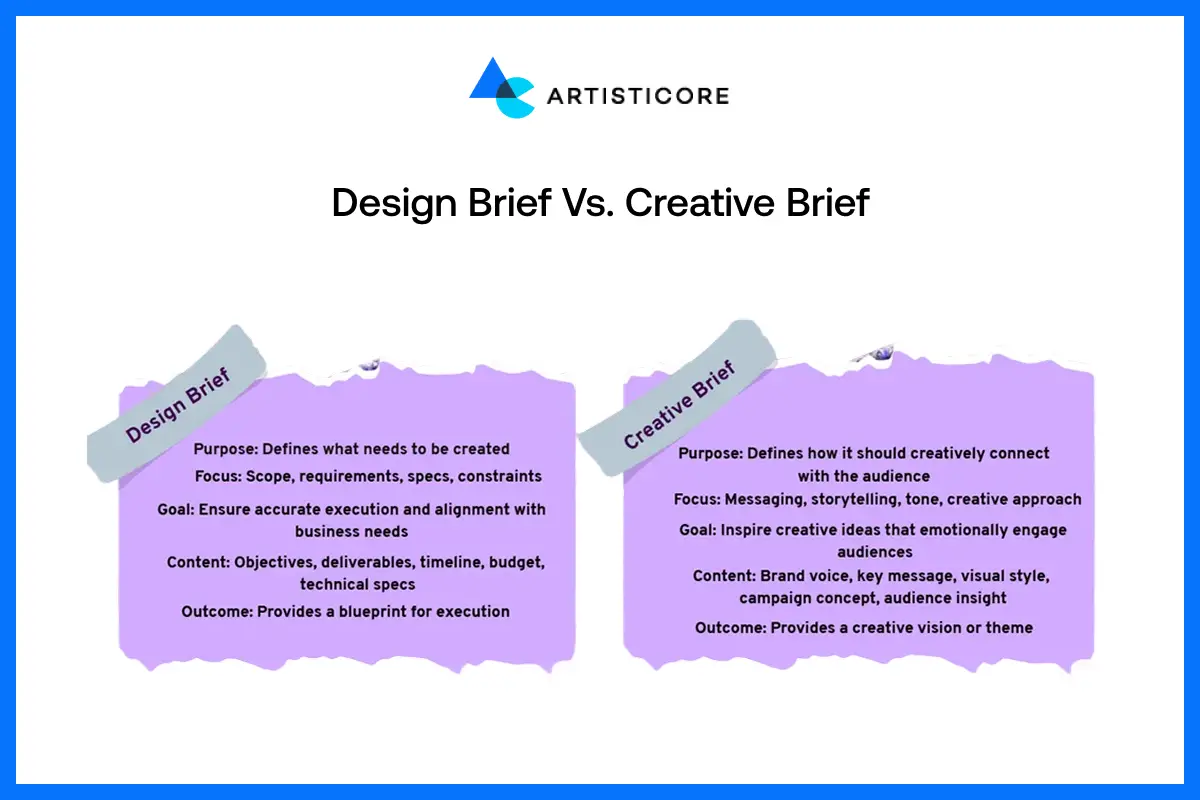
A design brief and a creative brief are not the same thing, and are confused by many. A design brief is concerned with initial planning and the business aspect of the project. It outlines the purpose, the timetable, what is going to be created, the budget and the individuals to utilize it. Consider it as a roadmap that helps to keep the project on the path and to the business goals.
A creative brief definition in graphic design, however, examines how to do it. The design team study all the components of a creative brief in order to investigate visual plans, learn the good creative brief examples, all the artistic touches, the message, and ways to appeal to the target audience.
If you’re looking for the answer to what is a creative brief in graphic design, consider it as guideline that direct the team about creative decisions. To compare it with design brief, it is easy to say that the design brief tells you what needs to be done and why, whereas the creative brief tells you how it is going to be done. A combination of the two provides clarity. They both creates a seamless workflow which not only prevents confusion but also enhances outcomes.
Why Every Designer Must Have a Design Brief?
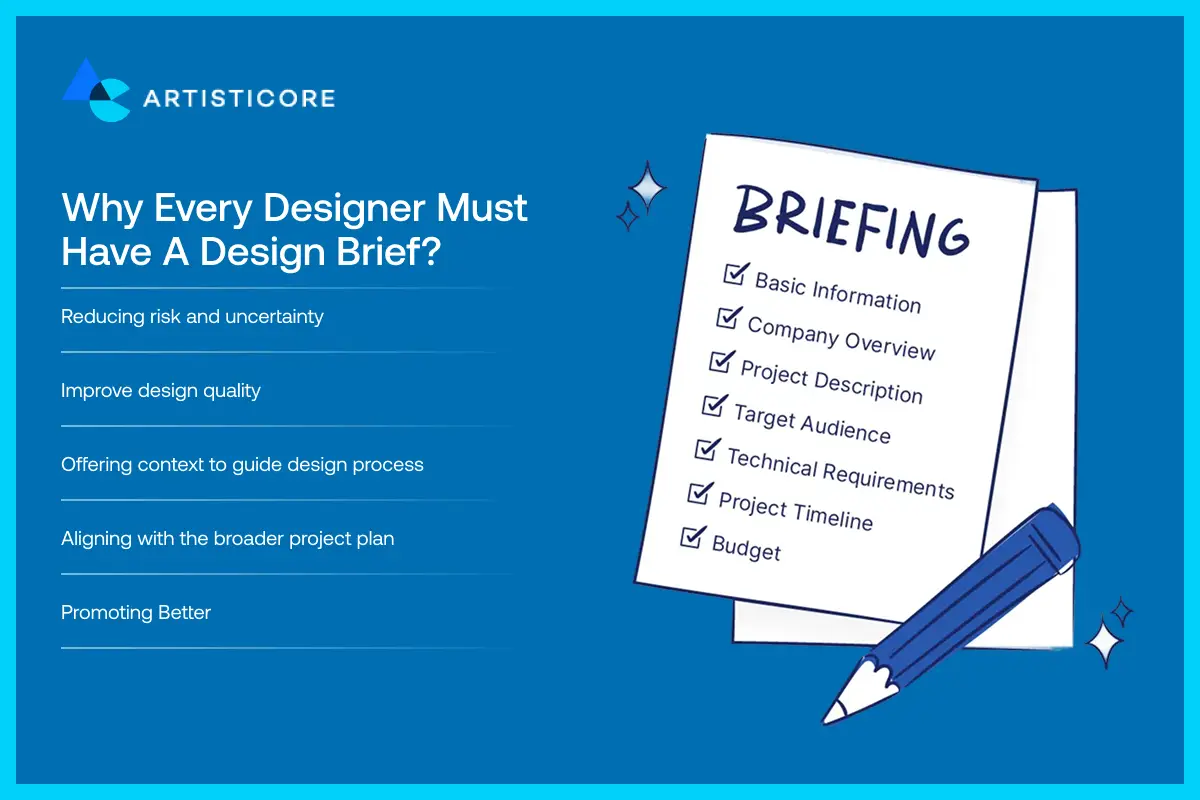
Not only having good briefs help direct your team but it also brings about clarity, focus and alignment in the project from the start. It helps everyone understands the goal and how to achieve it without causing confusion. Without visual brief, even the best designers can fail to provide satisfying results.
Establish Expectations and Track Projects
With the clear brand design brief, you can meet milestones as well as deadlines. Mention the design deliverables examples or what formats are best to set the expectation, convince and satisfy your clients.
This way, you and everyone on the team as well as your client will have clear idea of what they are working towards.
The best examples of a brief are the ones that eliminates guesswork, reduces confusion and keeps the team within the schedule. It helps you organize everything in the beginning. Everything from assigning roles to time schedule so that you do not end up in procrastination.
Cut Costs, Time, and Scope Creep
Writing a design brief helps you save your money, deliver quick outcomes and guide. This is because you already know what to do before you start getting your hands into anything.
It prepares you beforehand which reduce the number of repeated fixes and last minute changes. For example, if you are working on a UX design, having a UX design brief will help you stay focused on what is required and meet the business objectives.
Channel Creativity
Even the most talented designers require guidance. But, do you ever wonder what does a creative brief look like? It looks like a GPS of your project. Having online creative briefs for each of your project help your team take the quickest and the most efficient path to success.
A creative brief is not going to jail you or your imagination; it only helps you strategize your creativity to help you from wandering around. By understanding the objectives of the client, the target audience and priorities, designers can develop solutions that will reach the target rather than relying on guesses. In its absence you are likely to spend time, energy and resources on the wrong road.
Getting the Best out of Your Design Brief

Create context, not instructions: give reasons as to why each goal is important. Designers perform better when they know the reasons behind the decisions you are making. Also provide design briefs examples such as screenshots, mood boards or example designs can communicate style, tone, and direction better than text alone. It is not necessary to go too much: A brief, one paragraph is better than nothing. Add more details as the project progress.
Steps To Make a Design Brief

Who Writes the Design Brief?
There is no rule that explains who drafts the brief. Normally, in large organizations, marketing and brand managers write design briefs.
In others, designers and strategists also work on the write-up to help client better understand the project flow.
Teamwork is very important in the writing of a design brief. The client provides all the information about the business objectives and the audience and then designer transforms it into specific actions.
After writing the design brief, it goes through both the team members, board members and the client to avoid confusion and reach expected results.
Project Overview
The overview of the project provides a brief overview of everything. Name of the company, the industry, the offering and the mission or values of the brand.
Also mentions how the product is unique and why you’re designing it a certain way.
Describe the logo design brief templates, website design brief and the social media design statement template in mind regarding the product.
An overview gives a clear description to everyone on what the project is about and what will be the deliverable.
Goals and Objectives
In design brief, mentioning goals is extremely important. This is what your client is going to look into the most.
This will help them understand whether you understand their brands and products or not.
Discuss how will you achieve them. For example, if the goal is to increase the numbers of sign-ups at the website. You will mention the making of the concise landing page with increasing monthly sign-ups by 20%.
Clear goals in a design brief help designers understand the objectives and push them in the right direction.
Target Audience
Your project design needs to hit the target audience. In design, you mention the audience, their age, gender, location and how you are designing to target them.
Also look in to their interest and what make them return back.
Consider the platforms they use, and the issues they can normally face.
Simple buyer personas or empathy maps can help you make wise decisions on choosing tone, colors, and features.
Having a design that focus target audience make your visible and user centric.
Competitor Analysis
You also need to see your competitors and how they are working towards success. When you know their dos and don’ts, you get a better idea about where to look at. It also helps you stand out from the crowd by being distinct and unique. The best thing to do is to add examples of everything you are going to do and achieve. Pose questions like, is it worthy to copy and paste or do something unique of your own? This allows the team to make decisions sensibly and contribute towards the end product being unique.
Project Design Information
Provide definite creative instructions, style guidelines that define the success of the design. For example,
- Colors, fonts, logos, tone, and visual style guidelines.
- What works and what does not work? For example, what styles, colors, layouts to avoid.
- What works best on which platform including print, web, social media.
Clear guidelines ensure that the brand remains consistent and allow designers to be innovative.
Graphic Design Deliverables
Give the client exactly what they need. An explicit deliverables list will prevent confusion, reduce the number of changes, and help to organize the project.
Project Timescales
Describe start and finish dates, milestones and review periods. Create more time of changes and client feedback. This makes deadlines feasible, planning effective and avoids liabilities among projects. Specified deadlines reduce strain and maintain momentum.
Project Budget
Indicate the overall cost and its division towards research, design, changes and testing. Discuss the flexibility of the budget on additional work. Clear budget will help the team to make intelligent decisions, priority on high impact items, and eliminate confusion or low quality.
Brief Sign offs and Workflow Approval
Name the key stakeholders, their functions and methods of sharing feedback. When someone makes the final decision, who is the key contact, and who else are the key people, such as copywriters or developers? Review dates and easy approvals are set and use Figma, Notion, or Ziflow. A predetermined workflow reduces confusion, hold individuals responsible, and the deliverables are signed off within a short time.
Are you willing to make your ideas have a unique touch? Have them briefed and designed by Artisticore.
How To Write a Powerful Design Brief
A good design brief explains to the people the reasons why the project is important, what it is supposed to do, and how it is to be carried out.
Begin by describing why you are doing the project and where you would like to get to. Provide visual examples, e.g. mood boards or competitor screenshots to allow designers to see the kind of style you desire.
Establish attainable deadlines and set measurable goals in order to determine whether the work is successful or not. The language should be brief and concise, and the main points should be highlighted with the use of bullet points. Get feedback on the brief prior to its completion.
When there is a change in the project, revise the brief to keep everyone on track. A concise, practical brief provides designers with a clear direction of going an extra mile.
How to Use Product Design Brief Templates?

Design briefs can be written very quickly and reliably with creative design brief templates. They provide you with a list of areas to complete, which means that you never lose a critical area such as goals, deliverables, or dates.
The graphic design creative brief template will save time and minimize errors. It further makes the brief easy to read by both the clients and designers. Templates enable teams to be consistent in most of their projects and it is easy to compare the outcomes and simplify the process.
You can be either a small business or a design agency; a pre-built template will help you kick-start every project on a confident note. Customize the template to your requirements and you will always have a professional complete brief.
Mood boards and Visual Inspiration
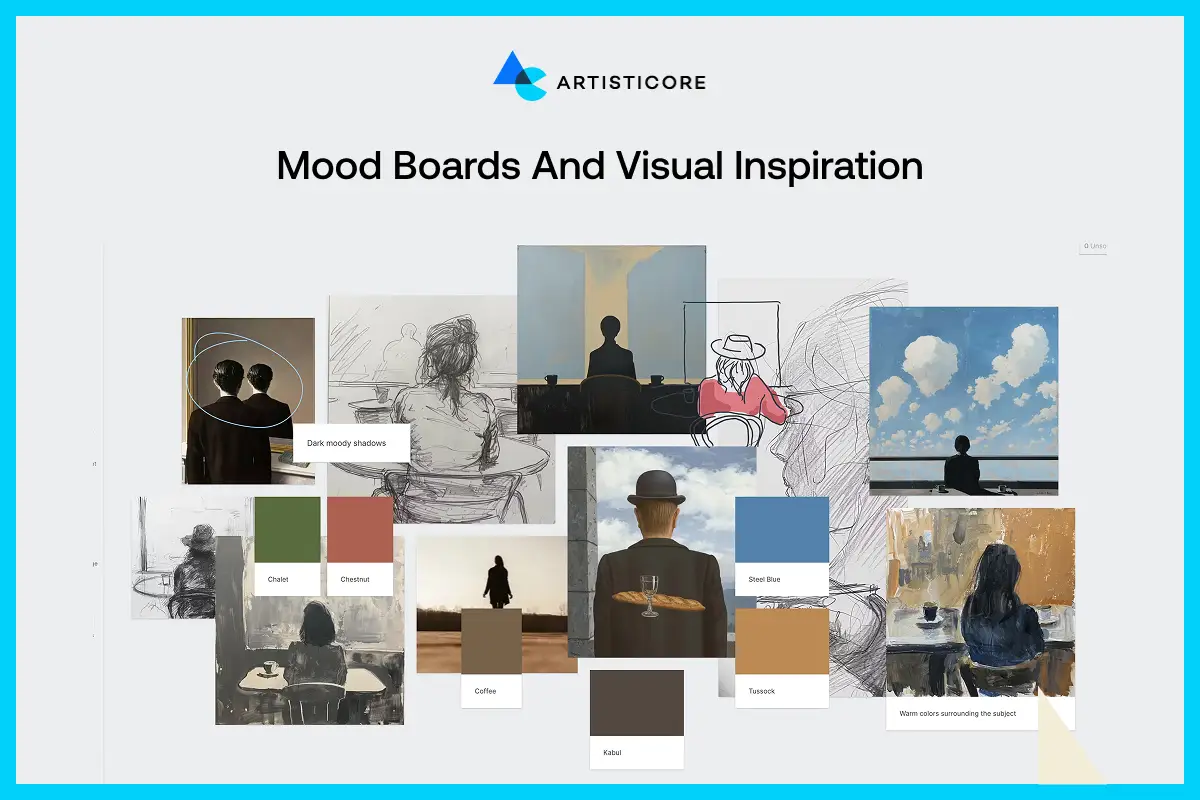
The incorporation of visual concepts into a design brief bridges the gap between concepts and the end result. Mood boards are a combination of colors, images, textures, and design features to explain the required style. Collect images of competitors, previous campaigns, or Pinterest and Behance.
Make notes alongside the images in case of what works and what does not. These visuals help designers have a clear guide and reduce the amount of guesswork and ensure that expectations are in line.
Branding, websites or marketing material Visual references are particularly useful in the case of the branding, ensuring that the final product contains the right amount of visual data such that it feels right to the target audience and that the brand is appropriate.
Case Studies / Examples
Design briefs are simpler to comprehend using real examples. Using SaaS as an example, a SaaS company can compose a brief where the goals are listed, which include the following: improving user onboarding and increasing sign-ups, mood boards, and brand colors. An e-commerce brief may contain instructions on the photos of the products, the types of files, and a mobile-first design.
A small business can provide a list of logos, fonts and a visual tone. Such examples demonstrate that an understandable structure can avoid misunderstandings and accelerate the work. The use of concrete mockups also makes people understand how they can create effective briefs in their own projects.
The Design Brief as a Collaborative Tool

A design brief is not designed exclusively to suit the designers only, but it is a method that ensures that everybody is on track. With goals, timelines, deliverables and approval steps noted, all stakeholders are aware of what they are expected to do. This reduces miscommunication, expedites decision-making and makes feedback useful. In case of disagreements, the brief is used as a point of reference and discussions about the project are maintained. Such a brief call-to-action as “Start a collaborative brief today” motivates teams to cooperate with each other initially. When individuals know the intent and how to do it, projects are carried out smoothly and produce superior designs within the budget and timeline.
Measuring Success
A brief must contain methods to evaluate whether the project achieved its objectives. Measures of success vary between projects. In the case of a web page, monitor the interaction, the bounces or subscriptions. To measure branding, recall, recognition or sentiment. The user testing and feedback reveals the effectiveness and the appearance of the design. Establish specific and quantifiable goals at the outset so that the team can experience success. Compare with these metrics regularly in order to be on track and implement changes prior to launching. The ability to determine what success is in the short term allows designers to target what really matters and allows clients to see how performance is being measured.
Design Briefs Tools
Briefs are easier to create and manage with the help of technology. Google Docs or Notion are convenient to use in collaborative writing and version control. There is another tool called Figma which helps you provide examples of images. You can also add mockup in design briefs as well as prototypes to elevate it. If you want to take client feedbacks, you can use a tool called Ziflow which helps you take client approval in real time.
These tools are your savior. They make communication easy as well help you remain on track when it comes to deliverables, timelines and feedbacks.
Small business or brands can also use these tools because they provide with free templates examples and work-at-once systems. The results are amazing; you save time and offer better transparency. The right tools transform a piece of content into a benefit that takes the project smoothly to its completion.
The Most Common Errors in Design Briefs
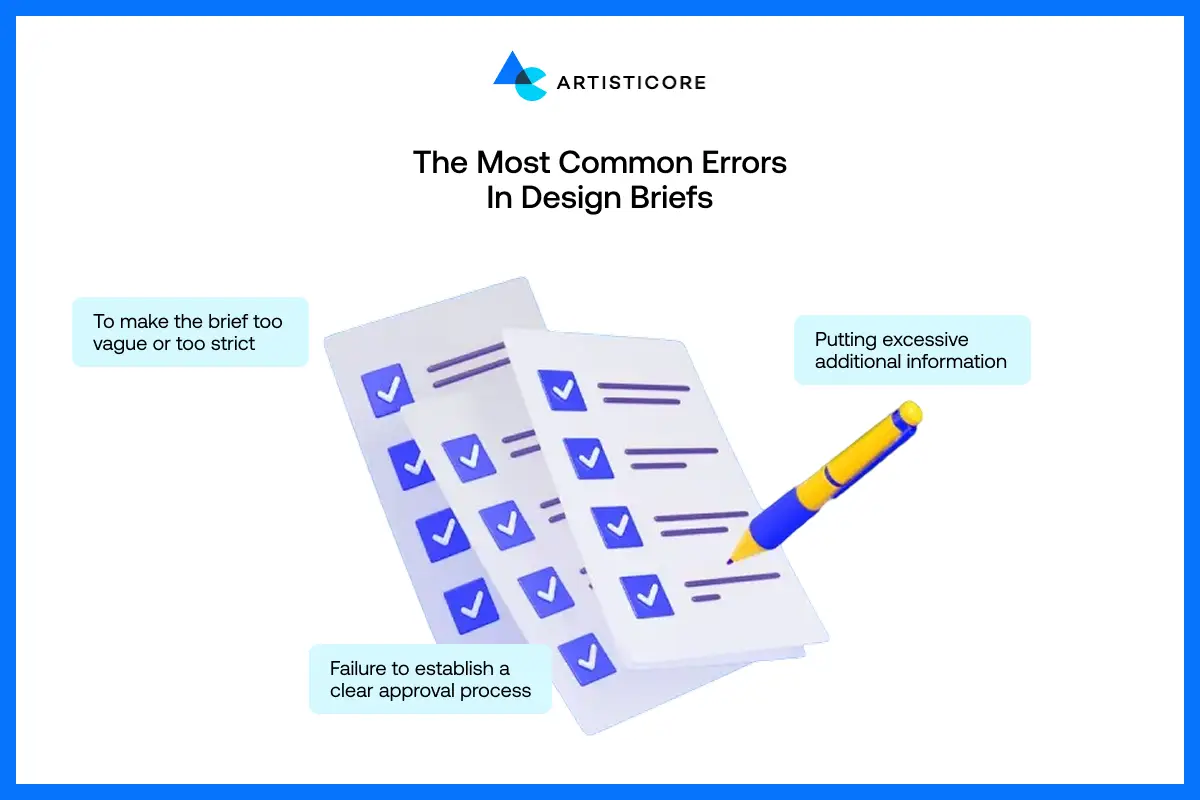
Do you know that even the most skilled designers and team members can fail without a competent brief? A good brief lacks any possible error and here the common ones that one must avoid.
Putting excessive additional information in the brief is a huge error. It distracts attention to the real objectives.
The other error is to make the brief too vague or too strict.
Another is the failure to establish a clear approval process that may slow down work and people may need to guess who has signed off.
To prevent these issues, make the brief concise. Only include what’s necessary, deliverables, file format, and number of revisions.
A balance brief saves time, eliminates stress, and ensure to deliver what is anticipated.
Struggling with a creative design brief? Collaborate with Artisticore now to get a personalized design!
Conclusion
The basis of every successful project is a good design brief. It provides a sense of direction, defines expectations of all and gets the team to work collectively towards the end. Writing down the objectives, the audience, the schedule, the budget, and the names of people that will authorize every action reduce the number of misunderstandings, improve the decision, and prevent the project from growing bigger than it should. Make work easier by using templates, inserting pictures, and establishing a clear approval mechanism. An effective brief also ensures improved design outcomes as well as enhanced collaboration and time and cost savings.
Get Your Personalized Graphic Design Brief Template Now!
Start your next project with you and have it finished on time, with purpose, and desired budget.
FAQs
Design brief discusses the look, objectives, and the work budget and deadlines. Project brief discusses the objectives of the entire project and those people involved.
In design brief, keep it 1 to 3 pages as it would suffice. The quality of it is more important than the length itself.
Update or make changes whenever you make any changes to the project or the design process. If there is any change in the project goals, time schedule, or deliverable design brief formats, add that in to design brief to keep everyone on the same track.
A design brief is necessary since it lays the groundwork to the entire project. It is also precise in defining the objectives, target audience, deliverables, schedule, and budget. Moreover, it provides context, direction and expectations which prevents misunderstandings, save time and resources. It also allows designers to work on the right problems. Finally, a good brief increases the probability of creating designs that fit the objective of the business and can appeal to the targeted audience.
You understand and align with the business goals, understand the aim, budget, requirements and the deadlines beforehand. You also remain focused and target the exact audience your client wants.
The design brief is written in the start before starting working on the creatives, mainly in the research and planning stage. This is to avoid any misunderstanding or confusion and to keep the process smooth.
The sections include the possible obstacles, mitigation strategies and dependencies.

Sultan Hanif is a seasoned wordsmith, who brings technology trends and innovations to life through his words. A tech-savvy gamer with a passion for all things football, Sultan blends his technical knowledge with creative storytelling to empower businesses and individuals alike.
