Latest and Emerging Web Design Trends of 2025
Author :
Every business and brand has a website design of its own, some go minimalistic and some extra. In 2025, new start-ups and business are still building and redesigning using latest web design trends.
Now, websites that are more accessible, adaptive, and smart are taking over. They are redefining the standards with the emerging design tools and technologies. The current web design trends are more considerate.
Websites with unity and speed in its design formula is in demand. Moreover, in the coming years, you will see websites that are credible have accessibility, and emotional connection, use of AI and automation, as well as creativity in design.
As a designer, brand or business owner, keeping up with these trends will assist you in creating websites that do not only appear beautiful but also work perfectly. We are going to discuss the main trends in web design of 2025 that change the world of the Internet.
Modern Web Design Trends
1. Use of AI Design Tools
Website designing is not an easy process, it takes proper science, art and strategy. The process also needs different set of individuals such as developers, coders, designers and strategist. In 2025, designers take help of AI tools such as Figma, Wix, Canva AI, and Framer AI to design progressively.
These tools do not only simplify but also provide with hundreds of creative ideas. Intelligent use of such tools can help with repetitive work process that allow designers and developers to focus on bigger things like how to keep a site memorable and timeless.
Next time when you design, use AI based tools to automate the process. These tools will help you with choosing the right color palate, layout scaling, matching grides, all the processes that takes a lot of time.
Importance of AI tools in Web Design Process
The goal is to make personalized experience for every audience clicking on the web link. In this context, personalized refers to personal web design choice. For example, one is accessing through a laptop, other from a phone, in both cases, the web design and content will fit according to each platform to satisfy the personal needs.
Designers struggling to create mockups or delivering a consistent brand identity can also use AI. AI tools help you figure out the key issues and suggest how you can refine your design details.
Example of Shopify Store
One of the best examples of AI powered web design developer is Shopify which allow you to create website under few minutes. You can simply go to Shopify and start making yours. If need help, ask google AI and it will explain you on how to make website step by step.
Any website design requires two things, UI and UX. One works on the visual appeal and the other on the functionality. In 2025, these AI driven tools help designers keep a balance between these two, in case you’re struck. Employ these tools and technologies as your savior, understand users’ behavior and the ways to deliver a personalized content and experience.
Benefits
The AI design allows small teams to deliver large outcomes. It minimizes creative burnout, accelerates updates, and provides scalable data-driven designs. The future of web design is intelligent, interactive and highly personalized.
Discover how AI-based design can make your next project smarter, create something smarter today.
2. Minimalism/ Maximalism Balance
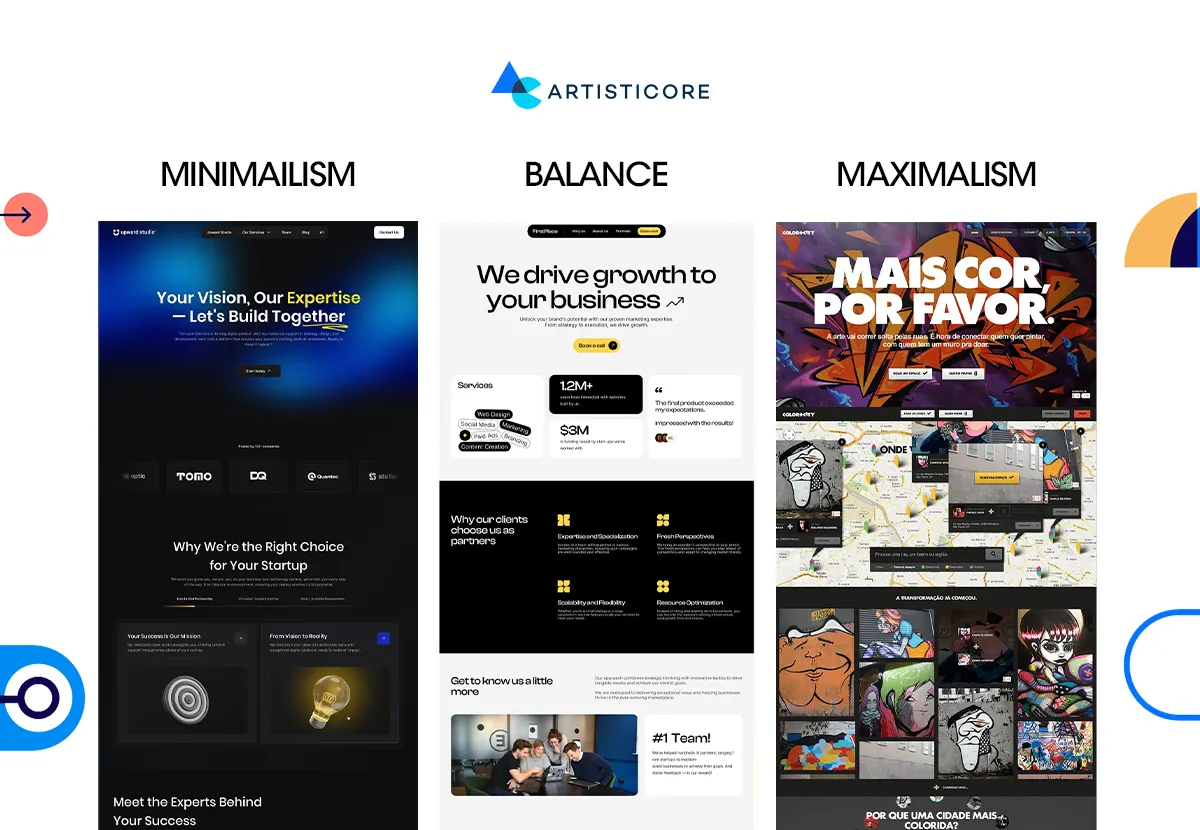
The two design types, minimalism and maximalism, are now taking a different turn. We can’t say that in 2025, one is better than the other. Modern web design trends are now seeking for a balance between both. Adding minimalistic design elements can help you with design clarity whereas, maximalism make design more appealing. Using the balance between both means achieving both clarity and eye-catching design experiences.
Keep in mind that the key is to bring balance. In 2025, there is no inclination towards more or less but a combination of both. Being able to deliver appealing, relaxing and sufficient experience to remain user friendly and memorable.
Examples of Famous Brands Achieving Both
Have you ever wondered how some brands remain timeless, leaving a lasting impression on our memories. I bet you can think of both technology related and luxury brands such as Apple and Chanel or Gucci.
These brands made use of both minimalistic and maximalism to leave a striking design balance. There is enough use of white space, open layouts design, strategic use of brand colors and typography. All these and at the same time, adaptive design features, micro animations to direct and use of infographics to inform and appeal.
How to Achieve Harmony
Begin with a simple base: grids, even spacing, and limited color palettes. Next sprinkle with maximalist elements, such as the use of heavy gradients, large type, or hero effect animations, to emphasize important moments. This combination of simplicity and drama makes your web site visually rich yet easy to explore.
Be minimal about organization and maximal about narrative storytelling, the contrast is what is compelling.
3. 3D and Motion UI
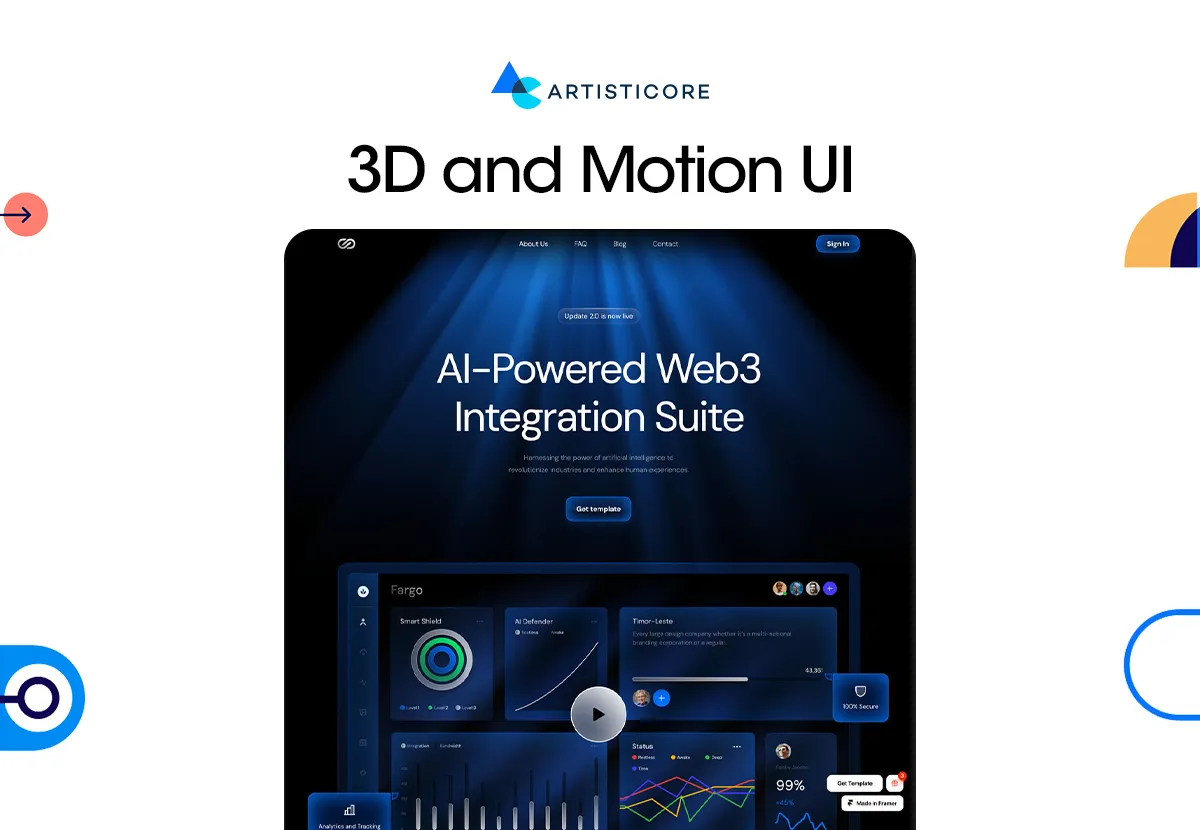
Web design is evolving more on immersive, interactive experience instead of flat screens. No one wants flat web designs with zero interactions. Just like how you would not say more than ‘Hi’ to someone who is not interacting on the same level as you. Web designs also need interactive features.
In 2025, the web design trends are calling for motion UI design to deliver a human like feel. This addition will directly impact user engagement, allowing users to spend more time and respond.
To add both 3D animations and micro interactions for a lively and interactive feel on websites, there are tools available. Tools like Blender is in demand followed by Three.js and Spline that help add smooth, responsive and beautiful models that work well on all devices.
Why 3D and Motion Matter
Motion is not simply about appearance–motion expresses functionality and feeling. Minimal transitions make the process user-friendly, parallax scrolling is extremely engaging, and 3D objects are worth exploring. Apple employs realistic product renders to enable emphasis on detail, whereas Nike employs kinetic motion to create energy and connection. Such experiences combine narratives with technology and keep the users more engaged.
Designing with Movement in Mind
Even small interactions, such as hover effects or moving icons, add personality to minor interactions and make interfaces more human-friendly. The key is moderation: the movement must direct rather than divert.
Best Practices
- Make animation purposeful.
- Make it easy to navigate and perform.
- Integrate 3D imagery with reactive micro-interactions to experience the flow.
4. Adaptive Modes (Both Light & Dark)
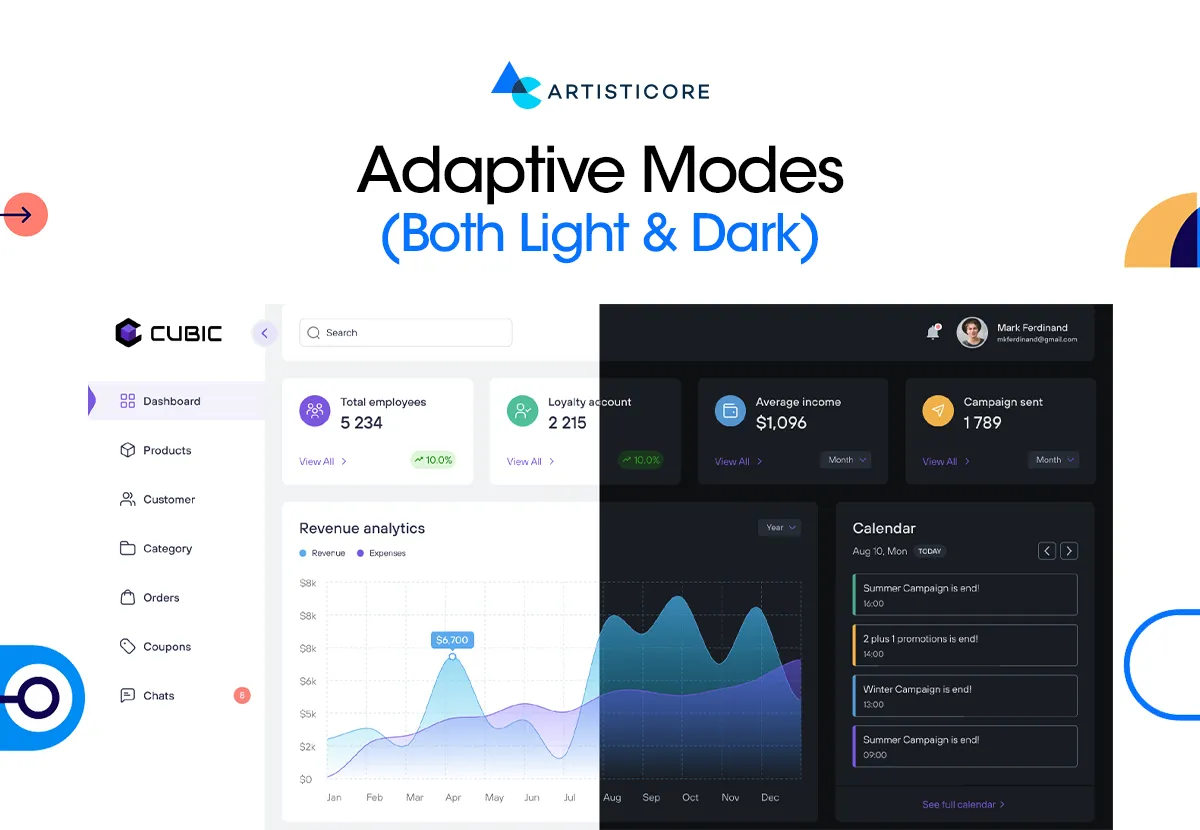
It is simply a choice of each individual to choose between dark and light mode. You can opt for any depending on your desire and need. However, Danil Egrove, a lead product designer claimed on his LinkedIn blog, 81.9% of android users prefer using dark mode whereas, 9.9% juggle between light mode and dark mode setting. According to Night eye, dark mode saves 63% of the device battery life.
Another study by Litmus claimed that in 2020, 29% of the iOS users were using dark mode which will increase by 40% in the upcoming years.
Dark mode also causes less strain on the eye and make visuals look more appealing. All these case studies tell us about how dark mode is not an exception but a requirement. Moreover, having adaptive modes can address users need, requirement and preference.
The Dark Design of the Universe
Dark interfaces focus on the contrast and make the content more prominent and enhance the readability under the poor light conditions. However, the best dark modes are not based on pure black, but are based on rich grays to provide increased readability and a more balanced appearance. Design tools such as Figma and Notion can now preview both modes at once to maintain visual alignment.
Leading by Example
On such platforms as Spotify, Airbnb, and Notion, users have a choice between light and dark experiences, which preserve brand identity in both. This adaptability establishes loyalty and accessibility without compromising design integrity.
Design Tips
- Choose dark neutrals over dark black colors.
- Use similar colors across modes.
- Always check contrast to be accessible and comfortable.
5. Eco-Friendly & Quick-to-Load Design
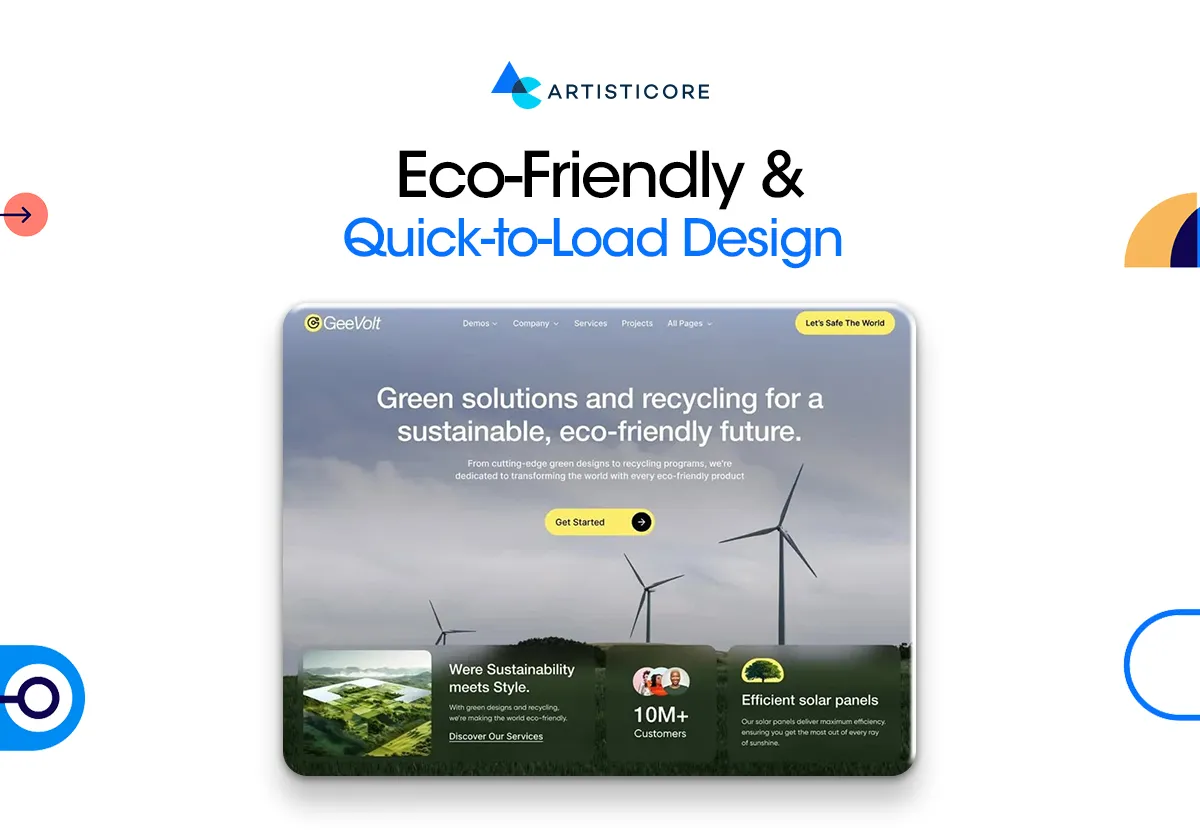
With the increase in the use of digital footprints, sustainability has become a design consideration. Eco-conscious web design, in 2025, will be the construction of websites which are not only beautiful but also responsible. To minimize the effect on the environment, designers are lowering the data loads, optimizing codes, and selecting green hosting solutions.
Why It Matters
Each extra megabyte causes carbon emissions. Rapid websites conserve energy besides enhancing search engine optimization, interaction, and usability. Innovations such as image compression, lazy loading, and clean code make the pages light and quick. The outcome: a smooth experience that is friendly to both customers and the environment.
Designing with Purpose
The experience of companies that have adopted sustainable design such as Mozilla and Ecosia demonstrate that performance can still go together with ethical considerations. A lean site that is green not only scores better in the search engines but it also empowers your brand in a conscious world.
You can think of sustainability as good UX: efficient, elegant, environmentally conscious.
Make your site faster and impressive - the sustainability begins with the intelligent design decisions.
6. Accessible and Inclusive Design
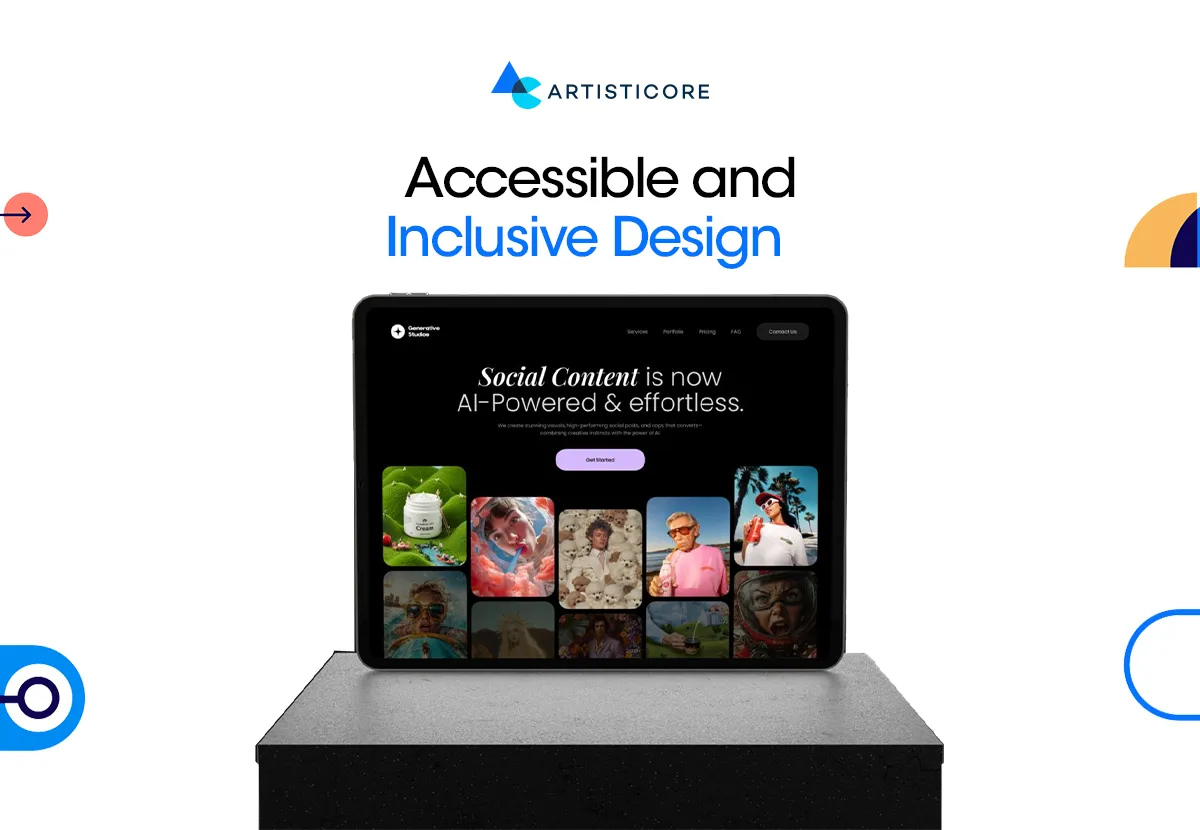
When the web designs are comprehensive and available to all, people with abilities and disabilities, it positively affects users’ engagement. Viewers feel like they belong. An inclusive and accessible design makes sure that all people find it easy to have a smooth online experience, even without the use of any abilities, devices, or backgrounds. Accessibility has ceased to be a luxury, but rather a fundamental value of a good design that enhances engagement, generates trust and signifies brand integrity.
Designing for All Users
An inclusive site will look at those users with visual, auditory, motor, and cognitive impairments. According to WCAG 2.1 guidelines, this implies the inclusion of alt text to images, captions to videos, and the inclusion of contrast ratios that facilitates the visibility. Designers also make sure that interfaces are touch, keyboard, and voice friendly to allow all visitors to interact with it.
Technology and Assistance Tools
Accessibility tools, such as Stark, AccessiBe, and Adobe Sensei, are AI-driven, so it is now easier to find and address accessibility gaps. They test color differences, propose alternative text, and emulate user experiences to individuals with disabilities to make teams design responsibly in the first place.
Setting the Standard
BBC and Microsoft brands are leading the way. Their sites are designed with scalable fonts, easy navigation and integrated media players, demonstrating that accessibility does not mean lack of creativity, but the opposite. Inclusive design is not a fashion; it is the future of online interaction.
7. Voice and Chat-Based Interfaces
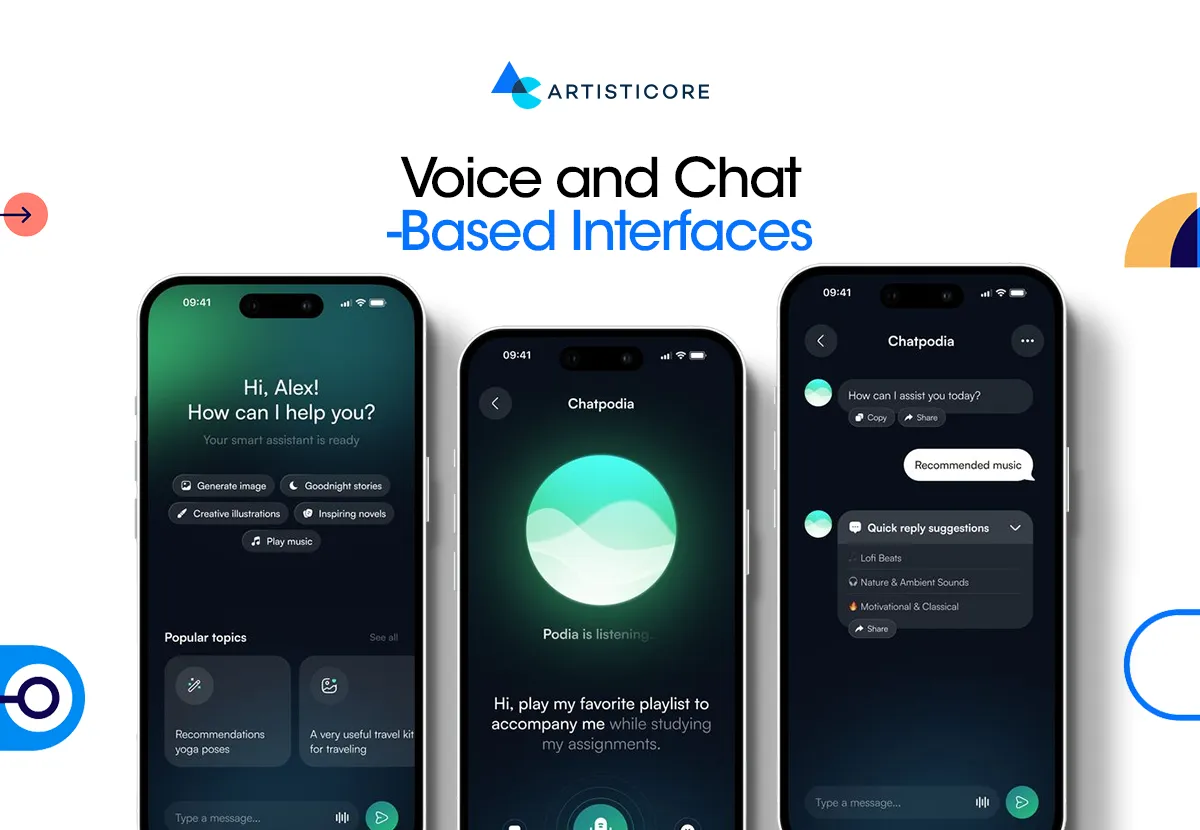
Each and every click makes the web more human. Voice and chat interfaces in 2025 will transform the way people interact with the internet- turning websites into an interactive space that listens, replies, and responds to conversations in a natural and conversational manner. Users no longer need to scroll endlessly or type, but can now speak out or even chat with the AI-powered assistants to get what they require in real-time.
Role of Conversational Interfaces in Improving UX
Applications such as Dialogflow, Rasa, and ChatGPT modules allow a two-way flow of communication between users and websites. These systems provide real time, personalized responses as they learn user behavior.
For example, Spotify has voice-based search menu that makes it easy for users with disabilities to use their platforms. Google also has this feature and people that are aged or juggling between two tasks can easily use it to save time and concentration. One another example is big brand like BBC that also allow voice-based conversation to explore content.
All these allows users to easily explore content. In most cases, it also turns the exploring experience into easy, memorable and quick one.
Why It Matters
Voice UI also increases accessibility to users with visual or motor disabilities and makes it faster and more interactive to all. It also makes the brands have a unique personality and transform the inactive websites into vibrant, human-like friends.
Emerging Web Design Trends in 2025
1. Gesture-First Navigation
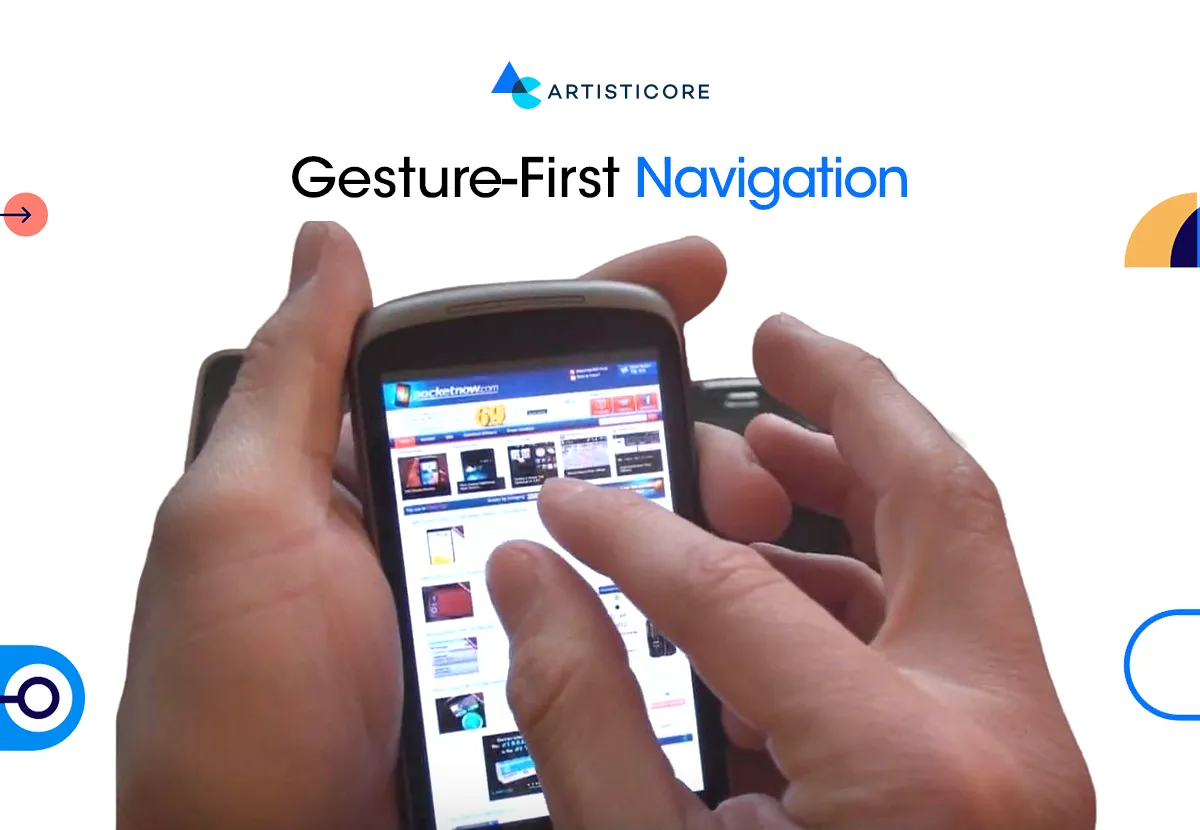
Prepare to say good bye to dull menus. The websites will be much more interactive in 2025 providing gesture-based navigation and non-familiar scrolling. Imagine swiping through menu items or sideswiping, or diagonal swiping or swipe-to-uncover menu designs that make it more of an app than a webpage. These gestures enable users to feel as being part of what they are viewing rather than as clicking through it.
Smooth touch, experimentation with spatial menus is also being tested on brands, which makes exploration easy and enjoyable. It is all about entertaining your visitors and directing them through your content without any problems. When properly executed, this trend makes navigation more of an experience, rather than a functionality.
2. Cursor & Input Animations
This is one minor feature that is making a huge difference: personalized cursors and interactive animations. In 2025, designers are including trails of cursors, morphing of shapes, and mischievous hover effects that enhance every interaction to seem alive. It’s a small gesture of making users smile, and even display a brand personality.
The best part? These animations do not necessarily slack your site. Minimalist effects may be smart and lightweight enough to provide an immersive feel without going too far with performance. Glowing cursors, trailing colors, shape-shifting details, these micro-interactions contribute to making your site feel more human, touchable, and enjoyable to navigate.
3. Calm Design
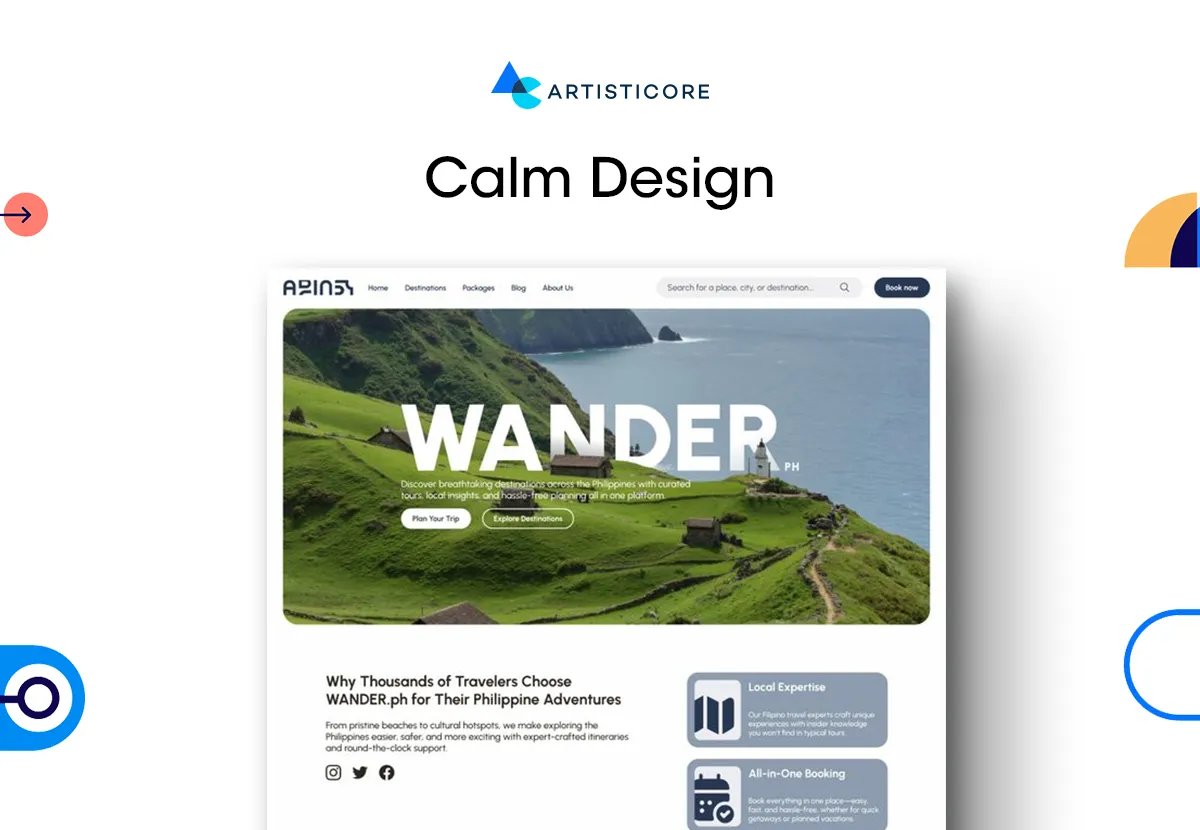
They are like a breath of fresh air in a noisy world. The trend is about developing relaxing and un-distracted digital environments where users are able to think and take breaths. You can anticipate gentle animations, subdued color schemes, and subtle movement indications that don’t scream but speak softly.
The key principle of this movement is known as calm technology, or design that informs and does not overwhelm. It is all about providing the control, space, and comfort to users and still providing them with a gorgeous visual experience. This trend is a glove-fit in case your brand is mindful, sustainable, or simple.
4. Dynamic and Customized Themes
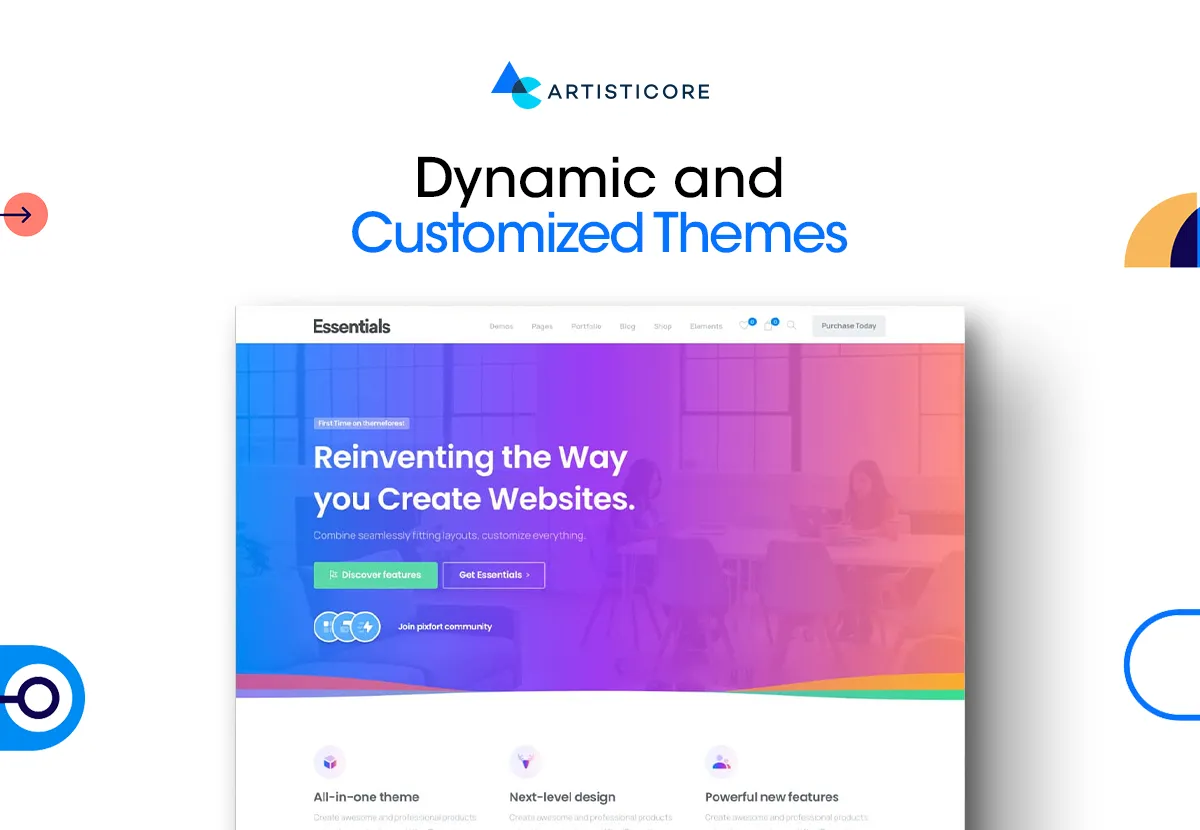
One-size-fits-all design? That’s old news. In 2025 websites are also getting to know how to adjust to their users in real time. Imagine your site automatically turning dark at night, or scaling up text to make it readable on mobile devices, or reorganizing layouts depending on how people browse.
This is not science fiction but rather adaptive design at work. These reactive systems customize color schemes, typography and even content depending on behavior and context. The result? An experience that is personal, natural, and smooth. Your site must seem like it understands your visitor, without having to pose a question.
5. Ethical & Privacy-Centered Design
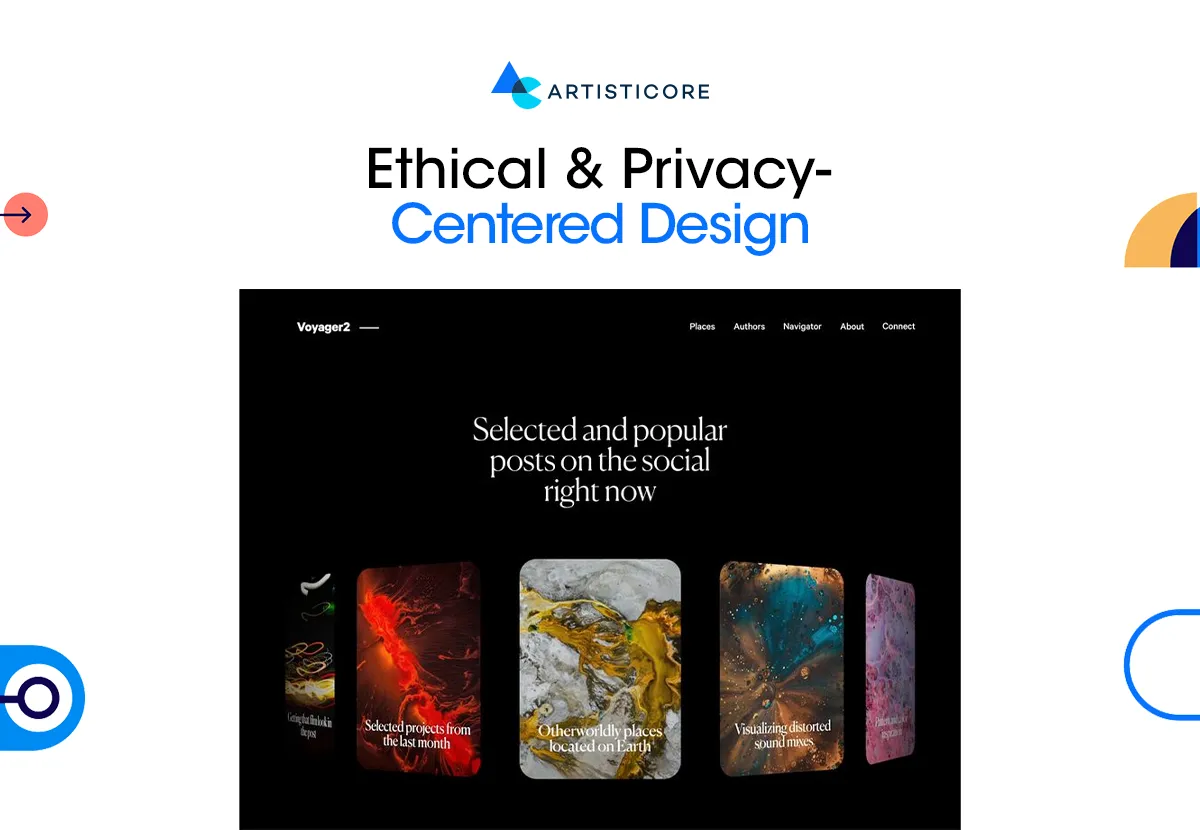
Trust is the new trend. You can’t expect users to trust you when your services and platforms are shady. People are now becoming savvier, they know what it takes to lose and who to trust. They also understand the importance of security and privacy. In 2025, the web design trends also include having ethical designs. The one that secure users’ data, remain transparent and users have the power to control on their information.
You will see cleaner consent flows, reduced dark patterns and transparency built into the interface. It is not only following rules, but demonstrating your brand values through design. When users have confidence in your site, they will spend more time and become more interactive as well as make repeat visits due to a sense of respect.
The Future of Web Design with Artificial Intelligence
AI has become an integral part of web design. Whether it is layout decisions or content generation, AI is assisting designers to think more quickly, work more intelligent and construct more receptive computer-generated experiences.
1. Smarter UX Personalization
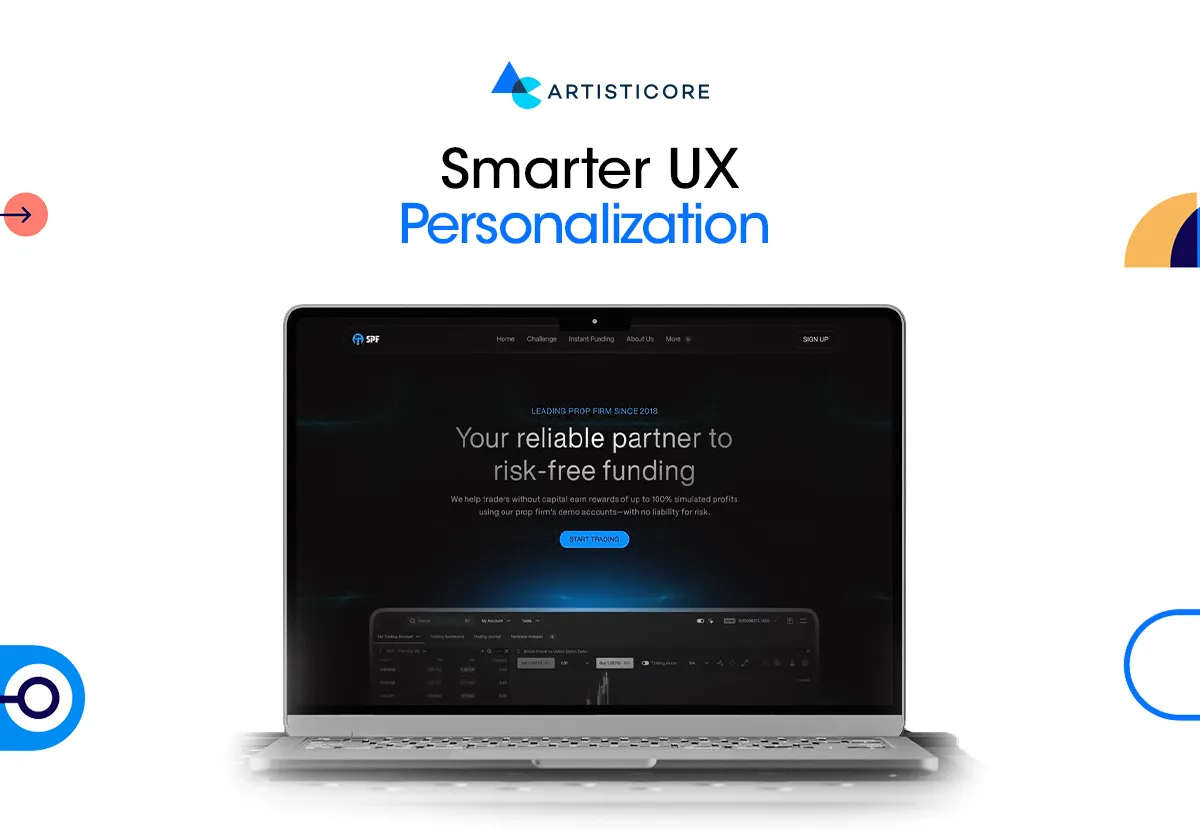
Artificially intelligent algorithms are used to scan user behavior and provide hyper-personalized online experiences. E-commerce sites suggest items that are similar to previous searches, and the publishers make changes in tone and design in real-time to meet the needs of each reader. The result? Increased interaction, loyalty, and increased conversion rates all fueled by smart automation.
2. Use of AI Powered Visuals and Content
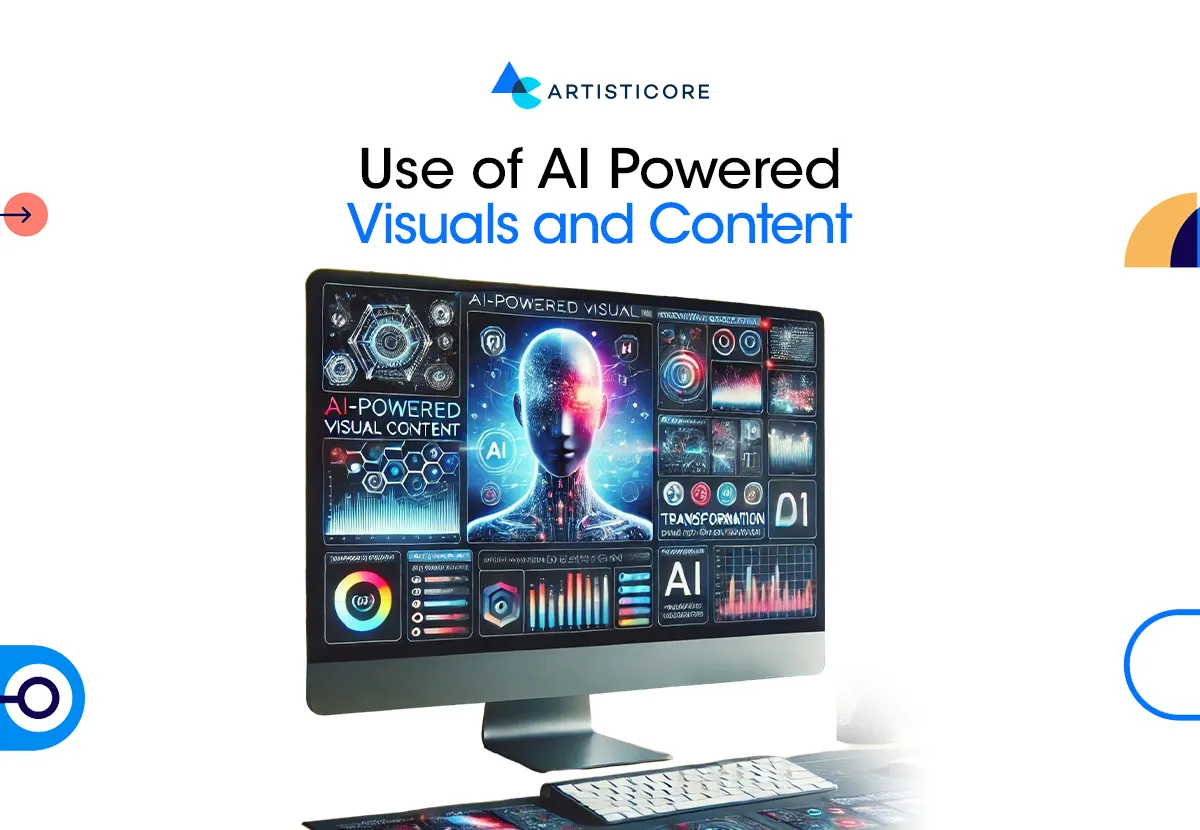
There is no need to design everything on your own, as AI is there for your help. Do not over use but employ AI with strategy to outshine. AI helps you with both content and visuals and there are tools like Midjourney, DALLE and Adobe Firefly at your service.
These tools help designers make exciting visuals, interactive icons and also animations. You can tweak it according to brand voice to deliver what is required.
Now, the problem is that people are afraid to use AI tools because they think it can take over their positions. Well, this is not true and will never be because tools only assist. They can save time and generate ideas but it is designer who will add the organic human touch.
3. Predictive Design and Automation
In apps such as Figma Smart Layout or Adobe Sensei, AI makes predictions about the most successful choice, such as typography or color pairings or interaction additions even before you begin. This type of predictive design can be used to provide consistency, speed, and quality on any screen. Have AI do the logic so that you can concentrate on storytelling.
Influence of Google’s AI overview on Web Design Trends
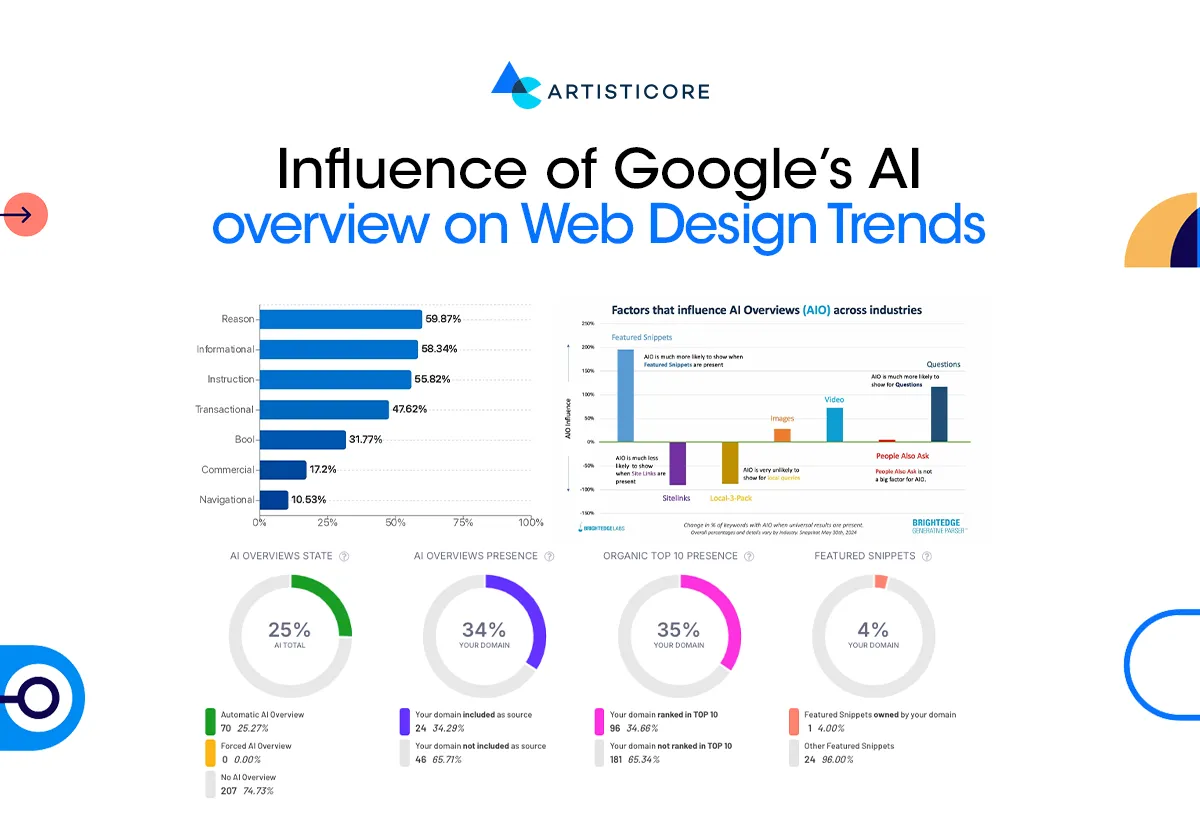
Have you observed that lately Google search results are beginning to appear somewhat different? It is due to the new AI Overview by Google. It does not only present a list of links but presents the most relevant answers in a summary in search. Pretty convenient, right? It is also a wake-up call to designers and content creators. Visibility is no longer a matter of keywords, but of clarity, structure, and accessibility. By 2025, how your site appears and feels is as important as what your site says.
Why Designers Should Care
This is it: AI Overview at Google rewards excellent design. Neat designs, easy to read text, and easy to access functionality is no longer just a good UX, but a requirement in improved rankings. Consider it in the following manner: in case a user cannot easily read or use your page, neither can the Google AI. It implies that it is now impossible to neglect meaningful headings, correct contrast and descriptive alt text. When you make designs that are human-friendly, you design algorithms at the same time. Good UX has now become good SEO.
New AI Design Trends
AI is not only transforming search, but it is transforming design as well. We are witnessing smarter, data-driven designs, responsive type, that adapts to user readability, and even color schemes that change to suit user moods. Less detailed, quicker loading design is gaining momentum as Google develops interest towards clarity and performance. And through AI based personalization, websites can customize images, content and even tone, to individual visitors. It is all about making designs that are human-like even with algorithms.
Making Web Design AI-Friendly
How can you distinguish your site in this AI-driven world? Start with structure. Add schema tags, such as FAQ, HowTo, or Product tags, to ensure AI knows your information. Divide your text into small, easy to read segments with concise headings that provide real answers. And not to be left behind are the basics: quick loading, mobile-friendly, and good accessibility. Such minor adjustments have a great difference in the experience of both users and search engines to your site.
Design to both humans and machines. The more transparent, quicker and organized your web site, the higher the performance of your web site is whether in search engine or user screens.
Be smarter than the robots--design your site to be seen by AI.
Future of Web Design
The future of web design is not about using humans or machines but collaboration. Combining creativity and artificial intelligence can open unlimited opportunities. Designers offer compassion, narrative and understanding of human emotion. AI adds speed, accuracy, and facts-based data that bring those creative thought processes to life in a faster and smarter way.
A Collaborative Future
The new era does not mean that AI is overthrowing designers, it is making them more powerful. Consider the tools that can predict user desires, customize each interaction, and optimize designs on-the-fly. This collaboration will enable designers to work on what is truly important: make experiences meaningful, ethical, and human. Since AI is able to do repetitive work, designers have the freedom to explore and strategize and be bold.
The Big Picture
The future of the web is a living ecosystem- intelligent, adaptive and emotional. They will be taught by users, change with behavior and react with personality. It will not be keeping up with technology, but rather putting it into good use. A human touch will always be required in great design to start stories, create emotion and create trust.
AI can do all the heavy work, but creativity remains in the driver’s seat. Enhance imagination with technology, rather than substituting it.
Conclusion
2025 will see a new age of web design, one that is intelligent, emotional, and responsible, created through AI-based design tools, sustainable performance, and inclusive experiences. The web design is not about the beauty, anymore, it is about creating the experiences that are human, smart and naturally responsive to the needs of the users.
With the changing technology, the most favorable designs will be creative and purposeful. Sites that react to voice, change to dark and light, and open immediately on any device are not just innovative, they go beyond that, they are thoughtful. This equilibrium between art and ease forms the basis of enduring online trust and interaction.
AI will keep on influencing the way we design but it is the designer, his/her empathy, imagination and moral decisions that will bring technology into significance. Brands employing these tools not only to impress but also to connect, inspire, and include are the brands of the future.
FAQs
As mentioned in the blog, there are latest as well as emerging trends but the most popular are those derived from AI. AI powered tools are not only in demand because of endless creative suggestions but also because it takes the workload away from designers. Furthermore, trends like micro-animations, responsive, adaptive themes, dark mode and use of sustainable design elements to create websites are also in demand.
AI simplifies the design work, personalizes things further, and develops smarter and efficient user experiences.
It is a new search feature that summarizes results within SERPs-rewarding structured, accessible, and well-organized sites.
Best tools are Figma AI, Framer AI, Adobe Firefly and Canva Magic Design.
Prioritize structured content, speed, and usability in order to meet the AI-first criteria of Google.

Hafsa Hanif is a talented content writer at WebnHubs, specializing in topics such as graphic design, web design and development, logo design, and animation. With her deep understanding of design principles and creative processes, Hafsa crafts engaging, informative, and SEO-optimized content that resonates with readers. Her expertise in SEO ensures that her articles not only captivate audiences but also rank well on search engines, helping businesses boost their online presence through compelling design-focused narratives.
